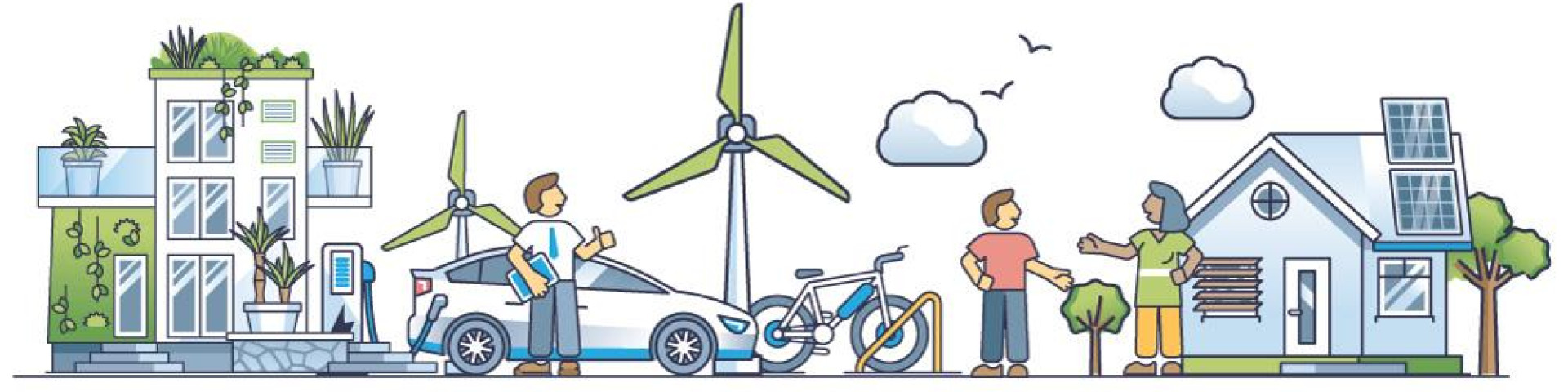
We define an energy community as a group of people who work together to manage their energy in a sustainable and beneficial way. They play a crucial role in driving the transition to clean energy, working towards ambitious goals such as:
- Smart Energy Use: Members share knowledge and resources, enabling homes and businesses to become more energy efficient.
- Investing in Renewables: Communities often pool resources to support local solar, wind, or other renewable energy projects, providing access to clean energy for all participants.
- Energy Empowerment: Energy communities allow individuals to shape their energy choices and actively participate in the energy market, negotiating better prices and even potentially selling excess clean energy back to the grid.
- Building a Resilient Future: Energy communities promote local energy generation and resource sharing, contributing to a more reliable and secure energy system for their area.
Why Should You Join an Energy Community?
Joining an energy community is advantageous across environmental, social and economic dimensions. Becoming a member of an energy community offers a way to contribute to a positive environmental impact while fostering social cohesion within the community and potentially saving money. Besides the environmental benefits such as Energy Efficiency and CO₂ Emissions reduction, there are also benefits in the sphere of economics and social impact. Thus, joining an energy community can also lead to profit sharing and boosting the local economy but also to strengthening social bonds and building a community.

Source: VectorMine/AdobeStock
How does an energy community typically work?
An energy community begins when members decide to form a collective, often choosing a legal structure such as a cooperative, association, or non-profit. Members contribute resources, which are pooled to invest in renewable energy projects like solar panels or wind turbines. This investment grants them collective ownership and control over the projects, giving them a say in management and how benefits are shared.
In EU directives, two types of energy communities are defined: Citizen Energy Communities (CECs) and Renewable Energy Communities (RECs). These communities have common features, such as promoting open and voluntary participation and being controlled by citizens, local authorities, and smaller businesses not primarily focused on energy.
How to engage with an Energy Community?
Joining an energy community is a fantastic way to become an active participant in shaping a more sustainable future. Here are some ways you can get involved and contribute to your community's success:
- Connect with Other Members: Many communities organise regular meetings, events, and online forums. These platforms provide opportunities to connect with like-minded individuals, share experiences, and learn from each other.
- Volunteer Your Skills: Energy communities often rely on the skills and expertise of their members to function effectively. You can volunteer your time and talents to support various initiatives, such as community outreach, fundraising, or technical assistance for other members.
- Contribute to Decision-Making: Depending on the structure of your community, you may have the opportunity to participate in voting on important decisions, such as project selection or investment priorities. This allows you to have a direct say in shaping the direction of your community.
By actively engaging with your energy community, you can make a valuable contribution to its success and enjoy the benefits of collective action towards a more sustainable future.

Source: Energy Communities Repository
Examples of Energy Communities
Hyperion Energy Community (Greece)
- Community Snapshot: Hyperion is located in Athens, Greece, Hyperion is a citizen energy community focused on tackling energy poverty and promoting renewable energy use. Established in 2020 as a non-profit Limited Liability Cooperative, it prioritises developing community-based solar self-consumption schemes. Their initial project involves constructing a 60 kW solar photovoltaic (PV) park in Thiva, aiming to power over 20 homes and small businesses, generating more than 90,000 kWh of clean energy annually.

Source: Hyperion
Energía Bonita (Spain)
- Communities Snapshot: Energía Bonita is the Energy Community of La Palma (Canary Islands) aiming to produce and consume local renewable energy, managed and controlled by the people of the island. It is a renewable energy community established in 2021 with 114 members.

Source: Energía Bonita