
With widespread access to the internet, smartphones, home appliances and other internet-enabled devices, digital technologies are key to address our everyday challenges.
The Internet of Things (IoT) refers to devices that can transfer data to one another without human intervention – some of which include smart electricity grids, home automation, and personal healthcare devices.
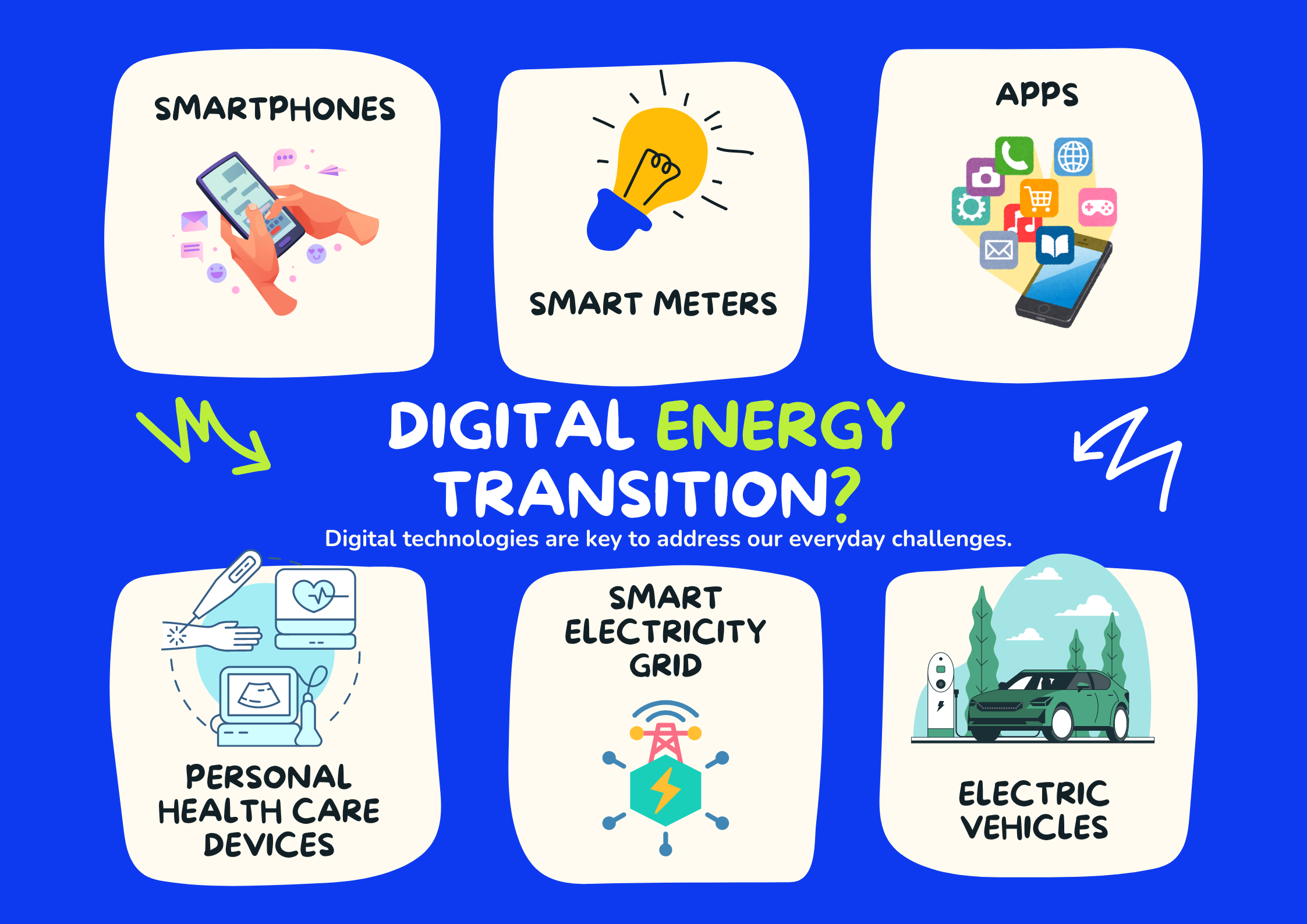
We may already use digital technologies without even realizing it! Do you have applications installed on your smartphone that monitor the temperature of different rooms in your house or control the lights? Or does your home have a smart meter, which monitors home electricity usage and send updates to your electricity supplier?
These kinds of technologies can help you better understand, monitor and reduce your energy consumption – which not only can be beneficial to use but also support companies and governments to optimize energy infrastructure. Additionally, they may help you reduce energy costs.
But most significantly, energy digitalization could lead to optimizing the consumption and production of energy – and support our transition away from fossil fuels by renewable energy sources.
Understanding how digital technologies play a role in energy can better equip us to make meaningful change in our everyday lives.
“What is the digital energy transition” is part of Every1’s Digital Energy Essentials Courses, which will be hosted on The Open University (UK)’s OpenLearn Create platform. The courses will soon become available in an accessible, easy-to-use online format and downloadable in different formats. The Every1 project is also developing accompanying offline versions of the courses.