Since 2002, Pixii has been an important reference in the field of sustainable and climate-resilient building and living. As a neutral scientific institution and member organization, Pixii uses carbon neutrality as the foundation for advancing sustainability within the built environment, drawing on the principles of passive construction.
Carbon neutrality provides a quantifiable and scientifically grounded benchmark that is increasingly reflected in global policy, legislation, and innovation across industries. To dive deeper behind the scenes of the work done by Pixii, the following interview was conducted by Every1 project partner Flux50.
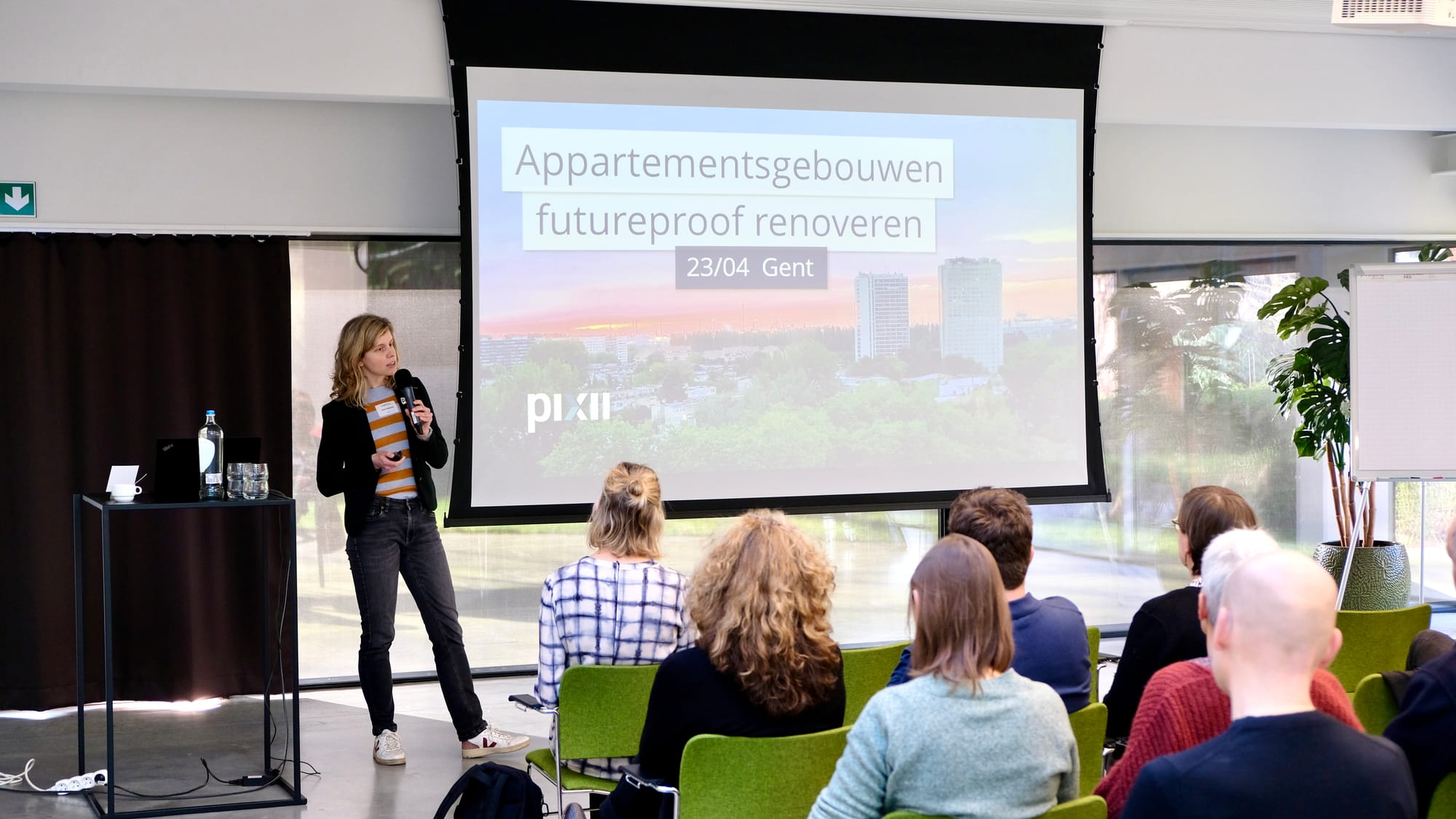
Can you introduce Pixii?
We are a non-profit organization accelerating the transition to carbon-neutral construction. We primarily do this through training, seminars, and lectures for professionals, as well as by facilitating and initiating research in collaboration with our members and other relevant partners.
We recently welcomed you to Every1. Why did you join our project?
Because we believe it is an interesting platform for further expanding our knowledge and range of services. It gives us the opportunity to reach larger target groups with knowledge about sustainable and energy-conscious construction.
We see opportunities in offering each other's materials via our own platforms. We may also be able to support each other when it comes to teachers.
What opportunities do you see for digitalisation in the transition to carbon-neutral construction?
There are many, too many to mention here, but we are currently working on developing a virtual reality offering. This should make it possible to view construction nodes in real life via tablets. The possibilities here are endless.
We are noticing that schools themselves are also increasingly focusing on digitalisation, by using software tools for instance. In our training courses, we also pay close attention to the possibilities of digitalisation and its added value in terms of circularity and energy consumption.
Pixii also gives classes in sustainable building to secondary school students. What exactly can we expect from such a course?
We provide various lessons for technical secondary school students. They can attend these lessons free of charge through our client Constructiv. They request them via an overview, where they can choose the classes that are most interesting to them. Our offering is broad, ranging from circular construction to acoustics, ventilation and heat pumps.
Every year, we see an increase in demand, so our offering really fills several gaps in terms of learning objectives. Our offering also changes every year, and we systematically focus on more practical exercises and site visits.
Why do you think it is so important to involve this particular target group, namely students in technical and vocational education, in sustainable construction?
Since they will be at the forefront of the transition to a sustainable construction sector, they must encourage companies to adopt sustainable methods and ways of thinking from the bottom up. This largely involves a change in behavior and mindset, which they must embrace. In all our courses, we emphasise the importance of circularity, the smart use of materials and energy, and knowledge of the basics of energy-efficient construction.
When they enter the world of work with this knowledge, they will hopefully set strict requirements for their employers, who will then have to adapt if they want to attract and retain workers.
What insights have you gained from the courses that Pixii has organised so far?
There is a great deal of interest from teachers, but we still need to motivate the students from time to time. The practical sessions in particular are widely supported. Recently, we were able to present our program to a large group of teachers from Catholic schools and ask for their feedback. It was very clear that site visits, for example, are still the most interesting. Students need to be able to see and touch the materials.
We have noticed that in most classes there are a few students who have already applied certain materials or techniques that are important in the transition during their work experience. This often leads to many specific questions, which are very interesting to explore in more depth. They often have strong opinions, which can lead to lively discussions. Most students learn something from this too.
What do you think is the biggest misconception about sustainable construction, especially among young people? Can you also comment on digitalisation within this sector?
As a contractor or technician, you cannot contribute to this transition. A frequently heard argument is that customers are not asking for it. But as the person carrying out the work, you do have a say in the matter. With the right arguments, it is often the better choice for both the contractor and the customer to opt for sustainable materials or techniques. We are thinking here of the way in which materials are connected to each other, so that dismantling is possible or maintenance-friendly installation so that pipes remain accessible and repairable. Or improving summer comfort when choosing a particular insulation material.
Contractors currently think too much in the short term; it is our job to point out the long term to students. How can they build for future generations in such a way that materials retain their maximum value, energy consumption remains low and our impact remains under control?
How do you see the future of your initiative?
This semester, our partner has been preparing to extensively promote our courses for the next academic year. Videos have been made, photos have been taken, and we have expanded and modified our offering. Compared to the first year, three times as many courses have been requested this year, and we expect a further increase next year.
It will be our task to keep all partners involved on board and to attract new, motivated teachers. Contractors and technicians, or architects and product designers, are also welcome to contact us, as we are still experiencing difficulties in linking construction sites to schools. We are happy to discuss this with interested parties.
Picture credits: Photo DL/Pixii